Smoky Quartz

SMKQ

See Smoky Quartz store

Smoky Quartz

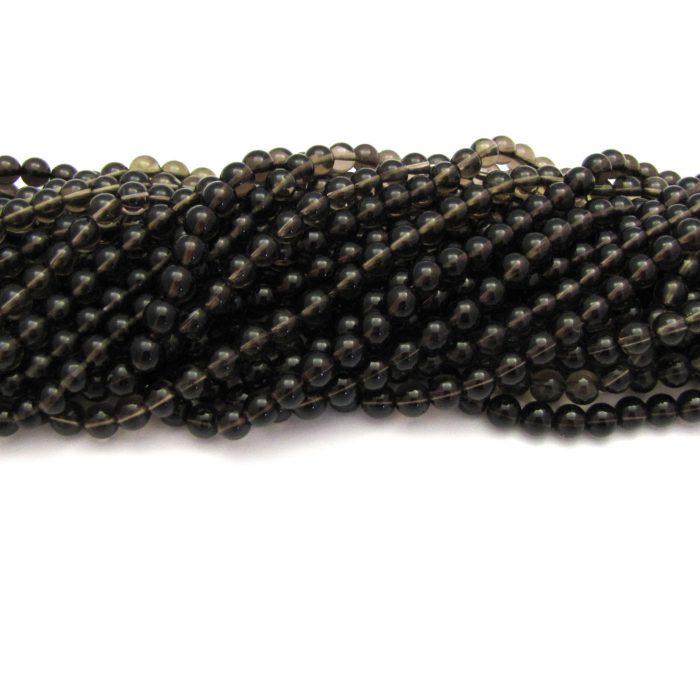
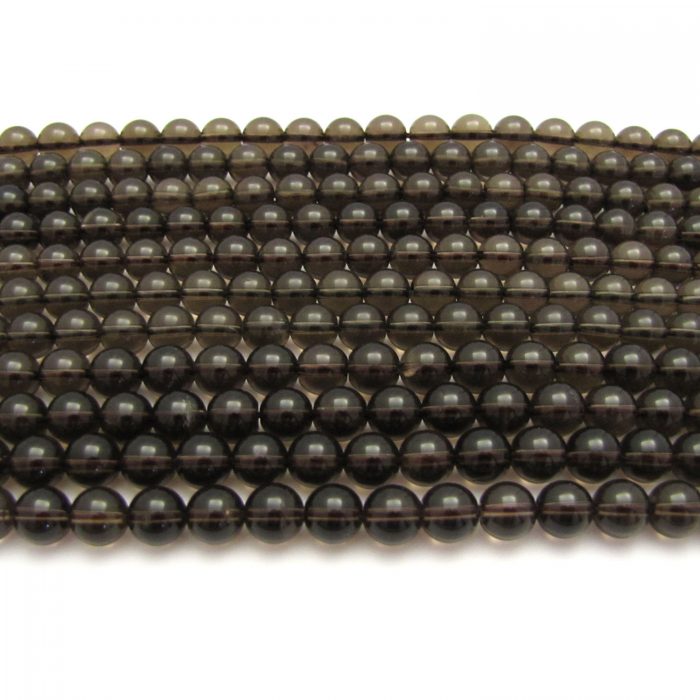
Smoky quartz, a type of macrocrystalline quartz or silicon dioxide, is a crystal that is usually large enough to be seen by the naked eye. This type of quartz is mainly transparent to translucent, with a glass like lustre. It belongs to the quartz family which includes amethyst, rose quartz and citrine.

Smoky quartz varies in colour from brown to smoky gray to black which puts it in the same rare and distinctive colour category as the black diamond, onyx and black or dark brown tourmaline, scapolite and agate.

The characteristic smoky colour comes about when the rock crystal is exposed to natural irradiation from radioactive elements over extended periods of time. The manner of the colour change is not well understood but it is believed that exposure to radiation transforms the oxidation states of impurities in the quartz structure.

Natural smoky quartz often occurs in granitic rocks which have a small but persistent amount of radioactivity although most smoky quartz that makes its way to rock shops and to some gem cutters has been artificially irradiated to produce a dark color.

The largest supplier of Smoky Quartz comes from Brazil in the state of Minas Gerais, the Pikes Peak area of Colorado, and the Swiss Alps, although Smoky Quartz can be found in most countries of the world.

Another fascinating place smoky quartz can be found is in the Cairngorm Mountains of Scotland and it is not surprising that the variety found there is called Cairngorm crystals. They are usually a smoky yellow-brown colour or gray-brown and are used in Scottish jewelry such as kilt pins and knife hilts. 

Braemar Castle near Aberdeenshire is home to the largest known Cairngorm crystal weighing 52 pounds. It is the national gem of Scotland, and their national sceptre contains a large Smoky Quartz crystal on top.

Morion, a sister to smoky quartz is a very rare and dark black, opaque, and somewhat translucent variety of smoky quartz formed through natural radiation near uranium deposits.

Coon tail quartz is a smoky quartz with an alternating black and gray banding like the tail of a raccoon. Coon Tail quartz is a local name found at several sites near Magnet Cove, Arkansas, United States.

Many believe in the influence of the smoky quartz stone in helping to heal certain physical disorders. Because smoky quartz is often naturally irradiated, it is believed to be excellent in treating radiation-related illness or symptoms from receiving chemotherapy. 

It is also believed that Smoky quartz is particularly effective for disorders of the abdomen, kidneys, pancreas, hips and legs. It supposedly reduces depression and has a calming effect.

The Romans considered smoky quartz to be a stone which brought a renewed joy of life after great suffering. For the Arabs, it was a stone of loyalty and friendship.

Smoky Quartz was sacred to the Druids. It is also associated with the goddess Hecate, as are many of the darker crystals and stones.

Smoky Quartz has been used in jewelry for centuries and recently has been very popular as a gemstone because of its earthy tones and tribal look. It has been cut in many innovative ways such as octagon cut, baguette, emerald, princess, pear cuts, spheres, pyramids, obelisk, egg, as well as cabochons and carvings. Historically, smoky quartz was cut and used as crystal balls by fortune tellers.

The astrological signs of smoky quartz are Scorpio, Capricorn and Sagittarius.


Turquoise Store